
Reformer Pilates for Runners and Surfers: A Bondi Guide
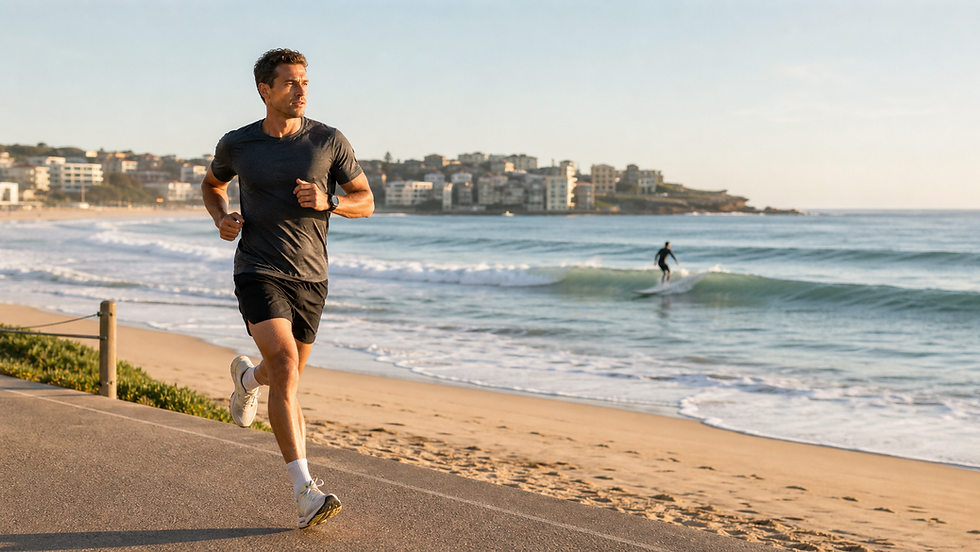
TL;DR: Reformer pilates is ideal cross-training for runners and surfers because it builds the hip stability, core control and rotational strength your sport demands, with almost no impact on already-loaded joints. For runners it strengthens glutes and single-leg control to protect knees and improve running economy. For surfers it builds paddle endurance, shoulder stability and the spinal rotation that powers turns. One to two sessions a week alongside your training is enough.
If you run the Bondi to Bronte path or paddle out at the south end, your body is taking a pounding most cross-training ignores. We sit on Hall Street, metres from the beach and the coastal track, and since 2002 we have trained a steady stream of local runners and surfers on the reformers. Reformer pilates for runners and surfers is not a soft add-on. It is the low-impact strength and stability work that keeps your knees, hips and shoulders in the game while everyone around you breaks down. Here is exactly how it helps each sport, and how to fit it in.
Is reformer pilates good for runners and surfers?
Yes, and for the same underlying reason: both sports are repetitive, one-sided loads that build power but neglect stability. Running hammers the same plane thousands of times a session, and surfing loads the shoulders and lower back through hours of paddling. Reformer pilates trains the deep stabilising muscles, single-side control and rotational strength your sport quietly erodes, all without adding more impact to joints that are already working hard. It is the missing half of an endurance athlete's training, the strength and control work that makes the fun part last longer and hurt less.
Reformer pilates for runners
For runners, reformer pilates targets the exact weaknesses that cause most running injuries: unstable hips and lazy glutes. Weak glutes and poor pelvic control are among the most common drivers of runner's knee, IT band pain and shin issues, because when the hip cannot stabilise, the knee and lower leg absorb the slack.
The reformer is built to fix this. Single-leg footwork and strap work train each leg independently, so your weaker side cannot hide behind the stronger one. Bridging and standing work fire the glutes and teach the pelvis to stay level at push-off. Research in the International Journal of Sports Physical Therapy reported that recreational runners who added two reformer sessions a week for eight weeks improved hip-extensor strength, single-leg squat control and self-reported running economy, all without changing their mileage. Stronger hips, better push-off, fewer breakdowns, more efficient stride.
Reformer pilates for surfers
For surfers, reformer pilates builds the three things waves demand: paddle endurance, shoulder stability and spinal rotation. Hours of paddling tighten the shoulders and lower back, and the pop-up and turns ask for explosive rotation and balance most gym work never trains.
Long-stretch and arm-strap work on the reformer build the shoulder stability and core endurance that keep your paddling powerful into the second hour. Rotational and oblique work develops the thoracic mobility and control behind smooth bottom and top turns. Standing and kneeling work on the moving carriage trains the exact balance and proprioception a board rewards. As the surf-and-pilates coaches put it, the goal is "increased hip, shoulder and thoracic mobility and breath control," which is a fair description of everything that makes a surfer fluid rather than stiff. Add the lower-back relief from decompressing all that paddling, and it is no surprise so many Bondi surfers cross-train on the reformer.
Why low-impact cross-training matters for endurance athletes
The reason reformer works for both sports is that it adds strength without adding load. Runners and surfers already accumulate huge volumes of impact and repetitive strain, so the last thing they need is heavy, high-impact gym work piled on top. Reformer pilates delivers genuine resistance training through smooth, controlled, low-impact movement, which means you get stronger and more stable while your joints actually recover. It is strength work that pays into your sport instead of competing with it for recovery.
How to fit reformer pilates around running or surfing
One to two reformer sessions a week is plenty alongside a full training or surfing schedule. Slot it on easier days or after a session rather than before a key run or a good swell, so you are fresh for your sport. Start in Essentials Reformer to learn the movements, then progress to Flow as your control improves. If you want the cardio side too, our Cardio Fusion Reformer class adds pace. At our Bondi studio you can train two streets from the sand, which makes a surf-then-reformer morning genuinely easy.
Frequently asked questions
Is reformer pilates good for runners?
Yes. It strengthens the glutes and hips that stabilise your stride, improves single-leg control, and builds core endurance, which together reduce common running injuries and improve running economy. Studies on runners adding reformer work show strength and efficiency gains without extra mileage.
How often should runners and surfers do reformer pilates?
One to two sessions a week is ideal as cross-training. That is enough to build stability and strength without cutting into the recovery your main sport needs. Place it on easy days rather than before a key run or surf.
Will pilates make me a faster runner?
Indirectly, yes. Pilates does not replace running, but stronger hips, better pelvic control and improved running economy mean you waste less energy and hold form longer, which shows up as faster, more durable running over time.
Can reformer pilates improve my surfing?
Yes. It builds the paddle endurance, shoulder stability, spinal rotation and balance that surfing demands, and relieves the lower-back and shoulder tightness that long paddles create. The result is more powerful paddling, smoother turns and steadier pop-ups.
Reformer or mat pilates for athletes?
Both help, but the reformer's adjustable resistance and single-leg, single-arm work make it especially good for correcting the side-to-side imbalances runners and surfers develop. Mat is a great supplement, the reformer is the stronger primary tool for sport-specific strength.
Train two streets from the sand
Whether you are chasing a Bondi to Bronte PB or a cleaner bottom turn, reformer pilates is the strength and stability work that keeps your body doing what you love, longer. One or two sessions a week is all it takes to feel the difference in your sport.
Try it at our Bondi studio on the 21-day unlimited trial, a short walk from the beach and the coastal run. Start your 21-day unlimited trial.
Related reading: 5 yoga poses for runners and How many times a week should you do reformer pilates?.


