Yoga for Tight Hips and Hamstrings (Poses That Work)
TL;DR: Tight hips and hamstrings almost always come from sitting, which shortens the hip flexors and keeps the hamstrings stuck in a slack, shortened position. Yoga is one of the best fixes because it both stretches and strengthens through full range. The most effective poses are forward folds and downward dog for the hamstrings, and low lunge, pigeon, bound angle and happy baby for the hips. Practise them gently three or four times a week, never forcing past mild tension, and most people feel looser within two to four weeks.
If your hips feel locked and your hamstrings scream the moment you reach for your toes, the culprit is almost certainly your chair. Our Bondi classes are full of desk-bound Eastern Suburbs workers undoing exactly this, and since 2002 our teachers have watched the same stiffness melt with the right poses done consistently. Yoga for tight hips and hamstrings is not about forcing yourself into a pretzel. It is about releasing what sitting has tightened and rebuilding length you can actually keep. Here is why they get tight, the poses that genuinely work, and a short routine to feel the difference.
Why are my hips and hamstrings so tight?
The main reason is prolonged sitting, and it tightens the two areas in different ways. When you sit, your hip flexors are held short for hours, so over time they shorten and lose length, which is why standing up straight can feel tight at the front of the hip. At the same time, sitting keeps the hamstrings in a shortened, slack position and switches off the glutes, so the hamstrings end up overworked and stiff. Add in driving, screens and the fact that most of us stretch far less than we move, and chronic tightness is almost guaranteed. The good news is that the same body that tightened from sitting responds quickly to the right movement.
Can yoga actually fix tight hips and hamstrings?
Yes, and the research backs it. Yoga works better than passive stretching alone because it lengthens the muscle while also strengthening it through a full range, which is what makes the new flexibility stick. A study published in the Journal of Bodywork and Movement Therapies found that a regular Hatha yoga practice significantly improved hamstring flexibility. Broader research is just as clear: one sixteen-week yoga programme improved participants' sit-and-reach scores by 3.5 centimetres and their hip and groin flexibility by around 6 centimetres. As little as 90 minutes of yoga a week has been shown to improve hamstring and spinal flexibility, so you do not need hours to undo your desk.
The best yoga poses for tight hamstrings
For the backs of the legs, forward folds and length-through-the-spine poses do the heavy lifting. Keep a soft bend in the knees on all of them, because forcing a straight leg only makes a tight hamstring guard harder.
Standing Forward Bend (Uttanasana): fold from the hips with feet hip-width and knees soft, letting your head hang. It stretches the whole back line from heels to spine.
Downward Dog: pedal the heels one at a time to loosen the backs of the legs, then settle. A reliable, active hamstring and calf stretch.
Reclining Hand-to-Big-Toe (with a strap): lie on your back and loop a strap or belt around one foot, extending the leg toward the ceiling. The floor supports your back so you can target the hamstring safely.
Head-to-Knee (Janu Sirsasana): seated with one leg folded in, fold gently over the straight leg. It releases the hamstring while also easing the lower back.
The best yoga poses for tight hips
For the hips, you want to open both the front (hip flexors) and the deep outer hip and glutes.
Low Lunge (Anjaneyasana): from a lunge, drop the back knee and sink the hips forward to stretch the front of the back hip, the exact spot sitting shortens.
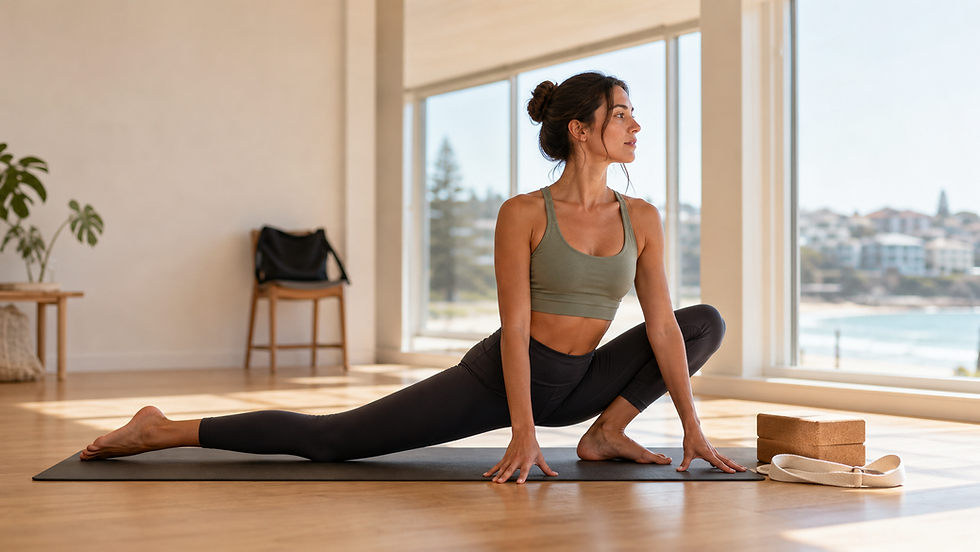
Pigeon, or reclined figure-four for beginners: pigeon is a deep outer-hip and glute opener. If it is too much, lie on your back, cross one ankle over the opposite thigh and draw both legs in for the same release with no strain.
Bound Angle (Baddha Konasana): sit tall, soles of the feet together, knees falling open. Sitting on a folded blanket tilts the pelvis forward and makes it far more accessible.
Happy Baby: on your back, knees toward the armpits, holding the feet. A gentle, safe combined hip opener and lower-back release that almost everyone can do.
How long until your hips and hamstrings feel looser?
Most people feel a noticeable difference within two to four weeks of practising three or four times a week. The first changes are day-to-day: getting out of a chair feels easier, your forward fold reaches further, and your lower back nags less. Deeper, lasting flexibility builds over eight to twelve weeks as the muscles relearn their length and the surrounding muscles get strong enough to hold it. Tightness that took years of sitting to build will not vanish in a session, but it unwinds faster than most people expect once the practice is regular.
The one rule: never force it
The biggest mistake with tight hips and hamstrings is forcing the stretch, which backfires. A tight hamstring will guard and grip harder if you yank it toward a straight-legged toe-touch, and overstretching a cold or already-loaded muscle risks strain. The principle, taught in every good yoga class, is simple: "bend your knees as much as you need to," and work at the edge of mild tension, never pain. Following movement with gentle stretching, rather than wrenching a cold muscle, is what keeps the tissue lengthening safely instead of tightening in protest. Slow and consistent always wins here.
Frequently asked questions
What yoga poses are best for tight hips and hamstrings?
For hamstrings, standing forward bend, downward dog, reclining hand-to-big-toe with a strap, and head-to-knee. For hips, low lunge, pigeon or reclined figure-four, bound angle and happy baby. Keep the knees soft on all hamstring poses.
Can yoga fix tight hips and hamstrings?
Yes. Research shows regular yoga significantly improves hamstring and hip flexibility, because it lengthens and strengthens the muscle through full range rather than just stretching it. Most people feel looser within a few weeks of consistent practice.
How long does it take to loosen tight hips with yoga?
Most people notice everyday looseness within two to four weeks of practising three to four times a week. Deeper, lasting flexibility builds over eight to twelve weeks as the muscles relearn their length.
Why are my hips and hamstrings so tight?
Usually prolonged sitting. It shortens the hip flexors and keeps the hamstrings in a slack, shortened position while switching off the glutes, so both areas stiffen over time. Driving and screen time make it worse.
Is it safe to stretch tight hamstrings every day?
Yes, as long as it is gentle. Daily soft stretching is good for flexibility, but keep a bend in the knees, work at mild tension rather than pain, and avoid forcing a cold muscle into a deep stretch.
Undo your desk in a Bondi class
You do not have to figure out the sequence alone or wonder if you are forcing it. A guided class gives you the cues, the props and a teacher who adjusts each pose to your body, which is exactly how tight hips and hamstrings release safely.
Our Slow Flow and Yin classes at the Bondi studio are made for this. Try them on the 21-day unlimited yoga trial for $49 and feel how much looser a few weeks makes you. Start your 21-day unlimited trial.
Related reading: Can you do yoga if you're not flexible? and What is Yin yoga?.